Someone in Derby wants an employment solicitor, a flooring contractor or a wedding venue. More and more of them don't type it into Google any more. They ask ChatGPT, or they read the AI Overview that sits above Google's results, or they ask Perplexity. And the AI gives them a name or two, not a page of links.
If it doesn't know you, it names someone else. That's the whole game.
The short version
- AI tools mostly name businesses they can find in web search results and can check against other sources. There's no secret AI index you can pay to join.
- Being described the same way everywhere (your site, Google Business Profile, directories, LinkedIn) matters more than it used to.
- Pages that answer real questions in plain words get quoted. Vague "we're passionate about excellence" pages don't.
- Reviews, structured data and an llms.txt file all help the tools understand you. None of them is a magic switch.
- Nobody can guarantee a mention. Anyone who promises one is guessing.
How do ChatGPT, AI Overviews and Perplexity decide who to name?
They work differently under the bonnet, but the pattern is similar. When a question needs current, local or specific information, the tool runs a web search, reads a handful of pages, and writes an answer from what it found. It usually shows its sources.
ChatGPT
When ChatGPT searches the web, it leans on a search index (Bing is known to be one of its sources) and then reads the pages it gets back. So if Bing can't find you, or finds a thin page that says very little, ChatGPT has nothing to work with. Plenty of businesses have never looked at Bing Webmaster Tools. It's free, and it's worth a few minutes.
Google AI Overviews
AI Overviews are built from Google's own index. The pages it draws on tend to be ones that already rank reasonably well and answer the question directly. Good old SEO still does the heavy lifting here: crawlable pages, clear titles, sensible internal links, a site that loads quickly on a phone.
Perplexity
Perplexity runs its own searches and cites its sources right in the answer. It likes pages with clear, specific, checkable statements. A page that says "we handle commercial leases for pharmacies across the Midlands" gives it something to quote. A page that says "we offer a range of legal services" doesn't.
What makes an AI tool confident enough to name you?
Think of it like a new person in town asking around. If a few people describe you the same way, they'll trust it. If your website says one thing, your Google profile says another and a directory still has your old phone number, they'll hedge or pick someone else.
Consistent facts everywhere
Your business name, address, phone number, what you do and where you do it should match across:
- your website (every page footer, plus a proper contact page)
- Google Business Profile and Bing Places
- LinkedIn and your social profiles
- trade and industry directories, and any regulator listing
- Companies House, if the trading name differs, make the link obvious on your site
This is the boring bit. It's also the bit most businesses have never tidied up.
Pages that answer real questions
Write one page per service, and on each one answer the questions people actually ask: what it is, who it's for, how long it takes, roughly what it costs, what happens first. Use the question as a subhead. Answer it in the first sentence underneath. Then add the detail.
AI tools pull short, self-contained answers. If your answer only makes sense after several paragraphs of preamble, it's harder to quote.
Reviews
Reviews on Google and in your trade's own places give the tools (and people) evidence that you exist, you're active and customers rate you. Ask every happy customer. Reply to every review, good or bad, like a person.
Structured data
Structured data (schema markup) is a bit of code that tells search engines, in a fixed format, who you are: your organisation, your address, your services, your people, your FAQs. It won't rank you on its own. It does take the guesswork out, and search tools read it.
llms.txt
An llms.txt file sits at the root of your site and gives AI tools a plain summary of who you are and which pages matter. It's a proposed standard, and it's honest to say nobody has confirmed how much the big tools use it. It costs very little to add, so we add it.
What did this look like for a real client?
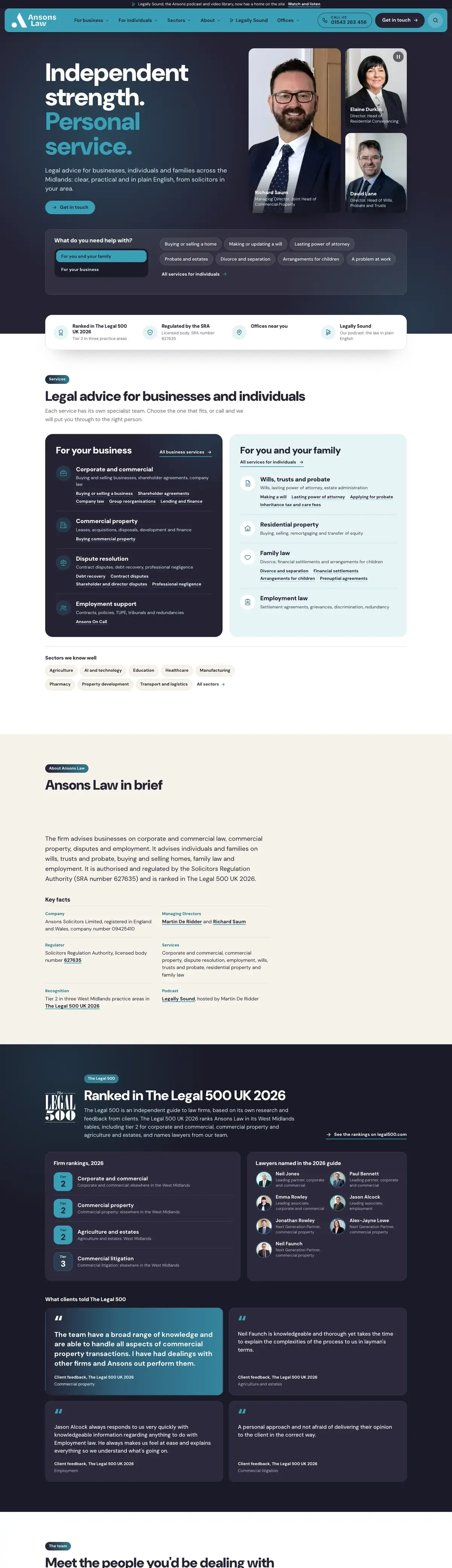
For Ansons Law, a law firm in the Midlands, we built a HubSpot site with detailed practice-area pages, solicitor profiles, structured data and consistent listings, and we check what the AI tools say every month.
Over 90 days, visitors who arrived from ChatGPT turned into enquiries at 10.3%, against 0.78% for visitors from organic search. In a September 2026 check, Google's AI Overview named Ansons first for niche searches such as "pharmacy solicitors".
Two honest caveats. The volume from AI tools is still small next to Google, and one firm's numbers don't predict yours. But it tells you something useful: people who arrive after asking an AI have often already been told you're a good fit. They turn up warm.
What can you do this week?
You don't need an agency to start. Here's a list you can work through in a few evenings.
- Ask the tools about yourself. Open ChatGPT, Perplexity and Google, and ask the question a customer would ask: "Who's a good plumber near Burton upon Trent?" (with your own trade and town). Write down who gets named and what they say about you, if anything. Do it logged out, so your history doesn't colour the answer.
- Check Bing. Search for your business on Bing. Set up Bing Webmaster Tools and submit your sitemap.
- Tidy your listings. Make your name, address, phone and one-line description identical everywhere. Start with Google Business Profile, then work outwards.
- Rewrite one service page. Pick the service you most want to sell. Add the real questions customers ask you as subheads, each answered in the first sentence below it.
- Ask for a handful of reviews. From customers you know were happy. Make it easy with a direct link.
- Add the basics of structured data. If your site is on HubSpot, Shopify or most modern platforms, organisation and local business schema is straightforward to add. If you're not sure how, that's a good question for whoever built your site.
What shouldn't you do?
- Don't stuff pages with "best plumber in Burton" phrases. It reads badly and it doesn't work.
- Don't buy fake reviews. The platforms catch them, and so do customers.
- Don't pay anyone who guarantees you'll appear in ChatGPT. Nobody controls what it says.
- Don't write dozens of thin town pages that all say the same thing. One useful page beats a stack of copies.
How long does it take?
Listing fixes and page rewrites can show up within weeks, because the tools search the live web. Building the kind of reputation that gets you named without hedging takes months of steady work: good pages, more reviews, being mentioned in the right places. It's the same slow graft as good SEO, which is no accident. It mostly is good SEO.
Where to go from here
If you'd like us to check what ChatGPT, AI Overviews and Perplexity say about you and turn it into a plan, have a look at our SEO and AI search work and the Ansons Law case study. Or Book a 20-minute call and we'll give you an honest answer, no pitch deck.