People don't browse for solicitors for fun. They turn up at a stressful moment (a divorce, a death in the family, a business deal, a dispute) with a specific question and not much patience. The firm that answers that question clearly, looks trustworthy and replies quickly usually gets the call.
That sounds obvious. Most law firm websites still don't do it.
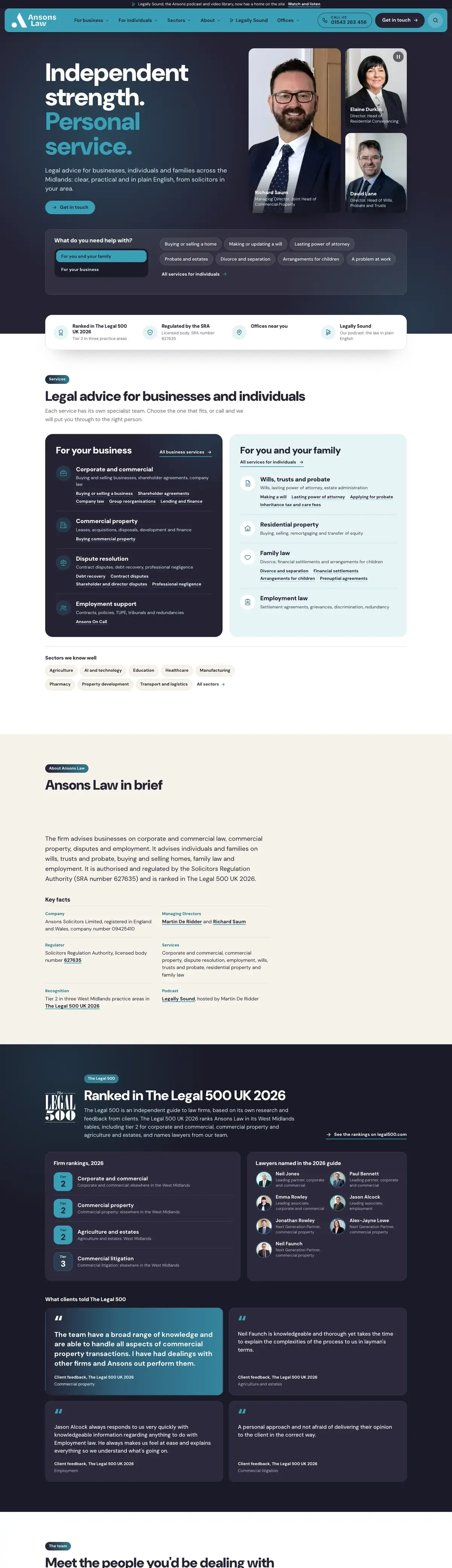
We've worked with Ansons Law, a firm in the Midlands, on its brand, HubSpot CRM and website, and on how it shows up in Google and in AI tools. Here's what we've learned about what brings enquiries in.
The short version
- Build one proper page per practice area, written around the questions clients actually ask.
- Give every solicitor a real profile with a real photo. People instruct people.
- Get your SRA transparency information right and easy to find. It builds trust as well as ticking a box.
- Reply fast, and use a CRM so no enquiry sits in an inbox overnight.
- Niche legal questions are where AI search is already sending people to firms. Write for them.
Why do practice-area pages matter so much?
Because that's where people land. Someone searching for help with a contested will doesn't want your home page. They want a page about contested wills, written for them.
A good practice-area page:
- says who it's for in the first line
- answers the real questions: how does it work, how long does it take, what does it cost, what do I need to bring
- explains the next step plainly, with a direct way to get in touch
- names the solicitors who do this work, linked to their profiles
- links to related services (a divorce page might link to finances and children arrangements)
Split big areas into sub-pages where people search for them separately. "Family law" is a heading. "Divorce", "financial settlements" and "child arrangements" are what people type in.
What makes a solicitor profile worth reading?
Profiles are often the most visited pages on a law firm site after the home page. People want to know who they'll be dealing with.
A profile that does its job has:
- a proper, recent photograph, the same style across the whole firm
- what they do, in plain words, not a list of Latin
- the kinds of clients and matters they handle
- qualifications, accreditations and memberships
- a direct way to contact them
Profiles also help search engines and AI tools connect a named expert to a subject. Mark them up with structured data so the link between person, firm and practice area is clear.
How important are reviews for solicitors?
Very. For a service people buy rarely and worry about a lot, other clients' experiences carry weight. Ask every client whose matter went well, at the moment it wraps up. Make it easy with a direct link. Reply to reviews thoughtfully, and never share anything confidential in a reply.
Look beyond Google too. Review platforms and legal directories that people in your practice areas use are worth keeping current.
Are SRA transparency pages just a compliance job?
They're required, but they're also good marketing if you do them properly. The SRA's transparency rules ask firms to publish price and service information for certain areas of work, such as residential conveyancing, probate and some employment tribunal claims, along with your complaints process. You also need the SRA digital badge on your site.
Written well, a pricing page answers the question every client has and most firms dodge. It shows you're straightforward. Written as a dense PDF buried in the footer, it does the opposite. Put it where people look, keep it current, and write it for a person, not a regulator.
How fast should a law firm reply to an enquiry?
As fast as you possibly can. Someone with a legal problem often contacts more than one firm. The first to reply with a clear, human answer has a real advantage.
That's where a CRM earns its keep. With every web form, email and phone enquiry landing in one CRM:
- the right person is told straight away
- you can see which enquiries haven't been answered yet
- you know which practice areas and which sources bring in work
- a simple welcome email can go out automatically, so nobody is left wondering if their message arrived
It also means partners can see the whole pipeline in one place, rather than across lots of inboxes.
Is AI search worth a law firm's time?
Yes, and especially for niche work. When someone asks ChatGPT or Google a specific legal question, the AI often names a firm or two. It picks firms whose sites answer that exact question clearly, are described the same way across the web, and are backed up by reviews and listings.
For Ansons, in a September 2026 check, Google's AI Overview named the firm first for niche searches such as "pharmacy solicitors". Over 90 days, visitors who came from ChatGPT turned into enquiries at 10.3%, against 0.78% for visitors from organic search. The volume is still small next to Google, but those people arrive having already been told the firm is a good fit.
The lesson for other firms: the more specific your expertise, the more worth it is writing a page that explains it properly. A general "commercial law" page competes with everyone. A clear page about a niche you really know may be the one the AI quotes.
Should a law firm do a podcast or video?
If you've got people who enjoy talking about their work, yes. Ansons runs a podcast, Legally Sound, where its solicitors talk through the questions clients bring them. Done well, podcast and video content:
- lets people hear a solicitor before they ever call, which takes the fear out
- gives you material for blog posts, social posts and emails from a single recording
- shows depth of knowledge in a way a service page can't
Keep episodes focused on one question each. Turn each one into a written article with a proper summary, so search engines and AI tools can read what was said. And don't start one unless you can keep it going. A podcast that went quiet long ago looks worse than no podcast.
What doesn't work?
- Generic copy. "We provide a comprehensive range of legal services" says nothing to anyone.
- Stock photos of gavels and handshakes. Show your real people.
- Hiding the next step. Every page should say exactly how to get in touch and what happens then.
- Chasing every keyword. Being brilliant at a few practice areas online beats being thin across all of them.
Where to go from here
Read how we worked with Ansons Law, see our SEO and AI search service, or have a look at our work with law firms. If you'd like to talk it through, Book a 20-minute call. No pitch deck, just an honest look at what would bring your firm more of the right enquiries.