In construction, most work doesn't come from someone stumbling across your website. It comes from relationships, tenders, frameworks and word of mouth. So it's tempting to think the website doesn't matter much.
It does. Before a buyer, a QS or a project manager puts you on a tender list, they'll look you up. So will the site manager who's heard your name, and the school business manager who's been told to get a few quotes. Your website is the check they do to see if you're the real thing.
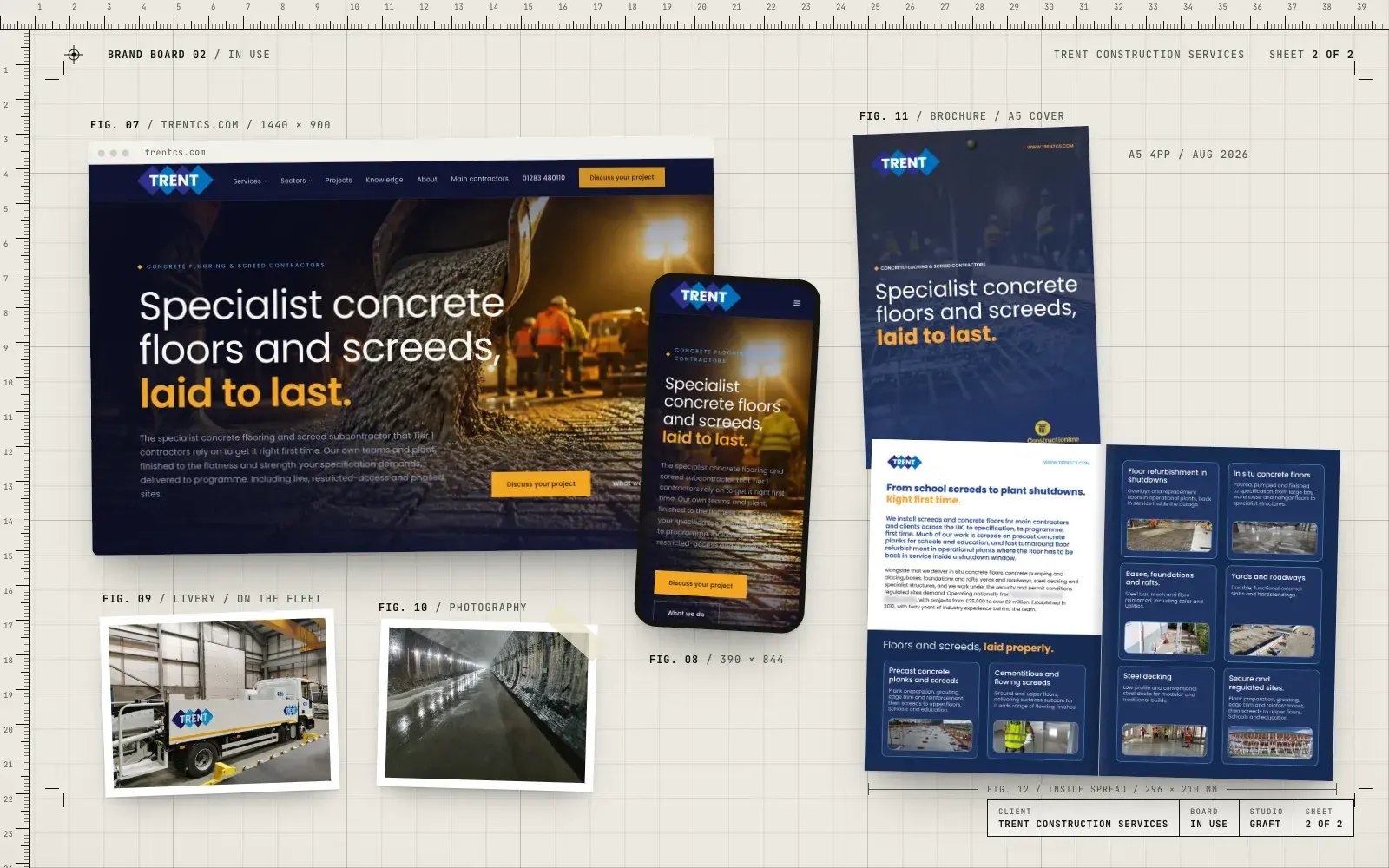
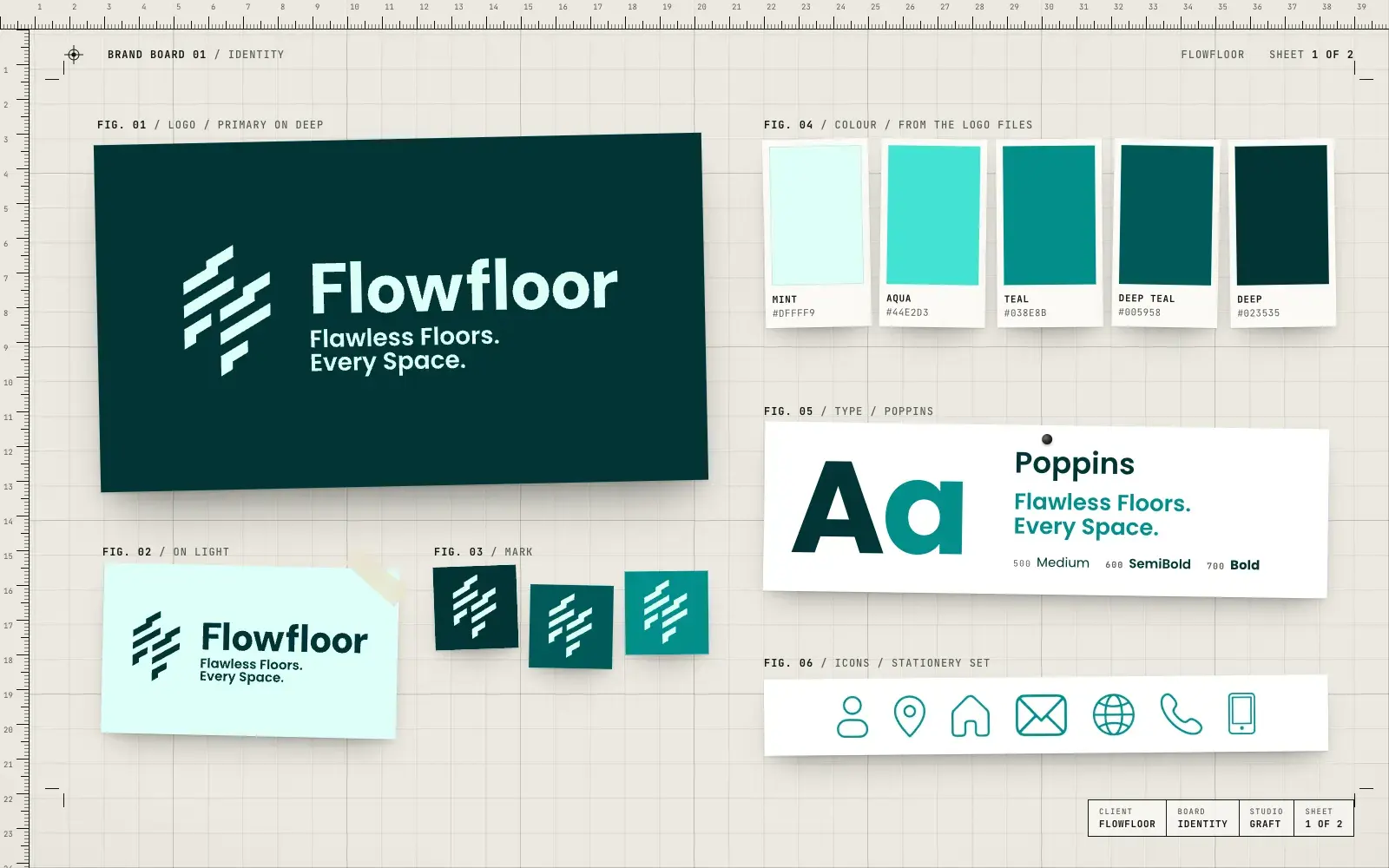
We've built sites for Trent Construction, a specialist concrete flooring contractor working nationally, and FlowFloor, a flooring company in Derby. Here's what we've learned about what those checks look for.
The short version
- Case studies are the most important pages on a contractor's site. Give each one the sector, the scale, the challenge and what you delivered.
- Put accreditations and health and safety up front. Buyers are checking boxes, so make them easy to tick.
- Only show main-contractor or client logos you have permission to use.
- Build one page per service and one per sector, written for the people who buy each one.
- Add a recruitment page, and make sure the whole site is fast on a phone on a building site.
Why are case studies so important?
Because a buyer's first question is "have they done this before, at this scale, in a building like ours?" A good case study answers it in seconds.
For each project, give:
- the sector: education, logistics, healthcare, data centres, residential, whatever it was
- the scale: floor area, programme length, value band if you're allowed to share it
- the client or main contractor, if they've agreed to be named
- the brief: what was needed, and any constraints like a live site, a school holiday window or a tight follow-on programme
- what you delivered, in plain terms, with the methods and standards involved
- real photographs, taken on the job, with people in hi-vis doing actual work
Tag case studies by sector and service, so a buyer looking at your education page sees your education projects. On the Trent site, the case studies sit alongside the service and sector pages, so each page shows proof next to the promise.
Where should accreditations and health and safety go?
Near the top, and on more than one page. Buyers going through a pre-qualification process are looking for specific things: quality management certification, health and safety schemes, cyber security certification, trade association membership, insurance cover.
- Show accreditation logos in a clear strip on your home page and about page, and link each one to proof where you can.
- Use the certification body's badge, not the standards organisation's own logo. Standards bodies often don't allow certified firms to use their mark.
- Write a proper health and safety page: your approach, your training, who's responsible, how you manage risk on site. A buyer comparing firms will read it.
- Keep it current. An expired certificate on your site is worse than none.
Can you show main-contractor logos?
Only with permission. A strip of big-name logos looks impressive, and it can be a real signal of trust. But those logos belong to someone else, and some firms are strict about how they're used. Ask first, keep a record of who said yes, and take a logo down if you're asked to.
If you can't show the logo, you can often still describe the work: "a flooring package for a tier one contractor on a new secondary school" still tells the buyer what they need to know.
What pages should a construction website have?
Service pages
One page per service you want to win more of. Write each one for the buyer, not for another contractor. Cover what it is, where it's used, the standards and methods involved, typical programme considerations, and link to relevant case studies.
For Trent, we rebuilt the service and sector content from 4.3k to 23.7k words across 16 pages. That's not about word count for its own sake. It's about answering the questions a buyer or specifier actually has, on the page they land on.
Sector pages
Buyers think in sectors. A school's estates team, a logistics developer and a data centre contractor all want to know you understand their world. A sector page says what matters in that sector (programme, disruption, finishes, safety) and shows the projects that prove you've done it.
A knowledge or insights section
Short, practical articles on the questions you're asked all the time: how long before trades can follow on, what works on a particular deck type, how to plan work around term dates. They help specifiers, they get found in search, and they get quoted by AI tools.
Recruitment
Good tradespeople and site managers look you up too. A careers page with real photos of your team, the kind of work they'll do, what you offer and a simple way to apply is often the hardest-working page on a contractor's site.
Contact
Make it obvious. Phone number in the header, an enquiry form that asks for the few things you need to price a job, your office addresses, and who to contact for tenders.
Why does mobile speed matter so much in construction?
Because a lot of your visitors are standing in a car park or a site cabin on a patchy signal. If your site is slow, heavy with video or hard to use on a phone, they'll give up.
- Keep images compressed and sized properly.
- Put the phone number where a thumb can tap it.
- Don't hide key information behind sliders or animations.
- Test it on a real phone, outside, not just on your office Wi-Fi.
What about brand?
A contractor's brand shows up on vans, signage, hoardings, PPE, tender documents and site boards far more than on a website. The site should match all of it. When we worked with FlowFloor, the brand went on business cards, stationery, a trailer and signage as well as the new HubSpot website, so the firm looks the same whether you meet them on site or online.
What doesn't work?
- Stock photos of hard hats. Buyers can tell. Use your own.
- A wall of text about "quality and service". Every contractor says that. Show it with projects.
- One big "services" page. It can't rank for anything or answer anyone's question properly.
- Out-of-date news. If your latest post is years old, it looks like you've stopped trading.
Where to go from here
See our websites service, read how we worked with Trent Construction and FlowFloor, or look at our work in construction. If you'd like a site that helps you get on more tender lists, Book a 20-minute call.