- Client
- The Do Club
- Sector
- Clubs and memberships
- Where
- The Midlands
- Stages
- Start, Launch, Grow
01 / The brief
Run the whole club from one place.
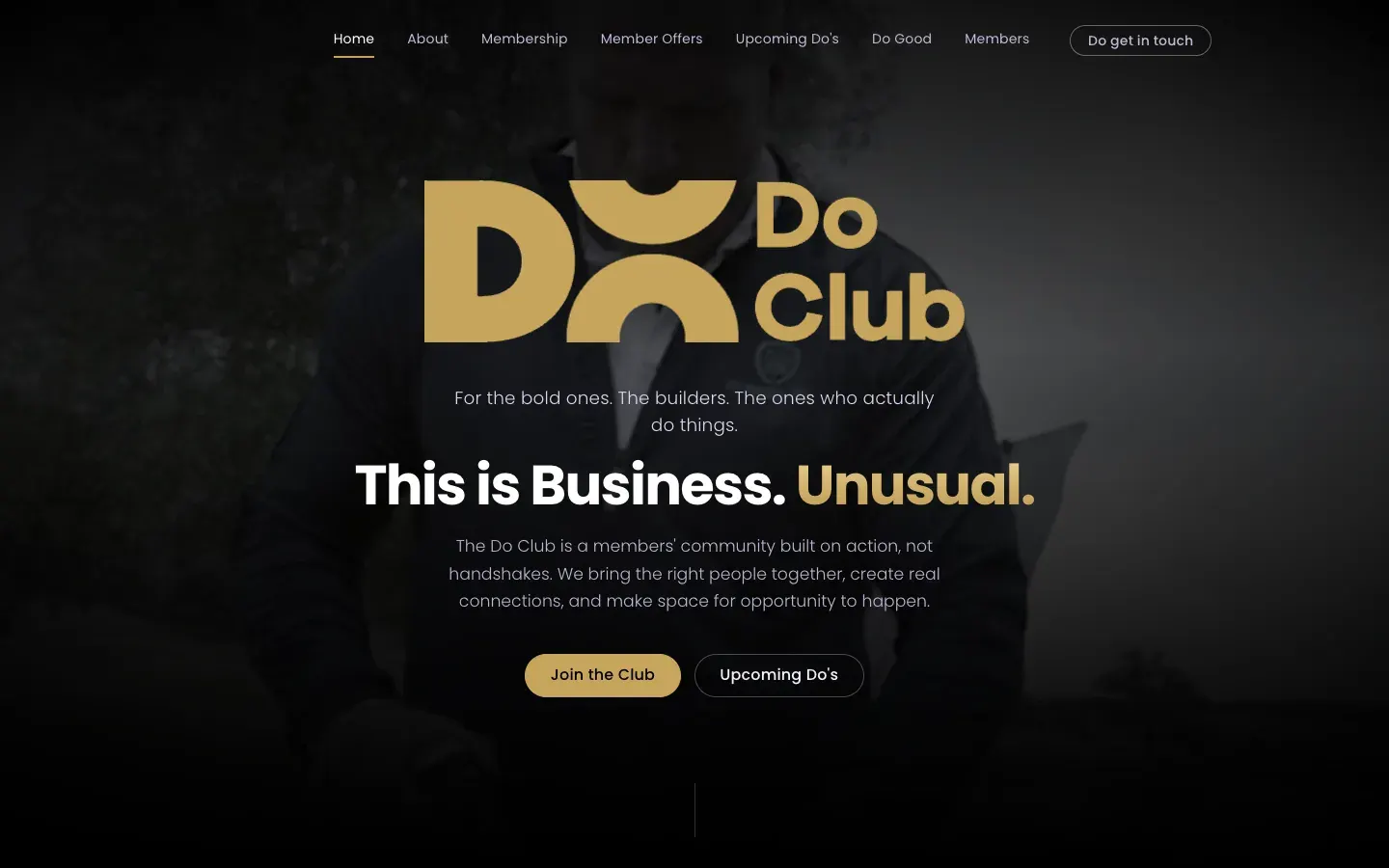
The Do Club brings business people together at events that are anything but a networking breakfast: rugby dinners, off-road days, wine tastings, talks. The goal was a brand with the same energy, a website that sells every Do and looks after members, and one place behind it where the club plans events, knows its people and does its marketing.
And all of it simple enough for the club's founder to run day to day, from a laptop or a phone, without calling us.
02 / What we did
Loud brand, clever engine.
- Master brand, colours, pattern and icons
- Event cards for every Do, a colour for each kind
- Brochures, flyers, table cards and digital screens
- Social posts and a short motion showreel
- Launch films for the new website, in every social shape
- New website built in Astro on Netlify
- Event pages with seats left, booking and member prices
- Membership tiers, team cards and a members' area
- A CRM and dashboard built around the club
- A planner that shows when a Do makes money
- People, members, prospects and messages in one place
- A studio for posts and flyers, plus club emails in Mailchimp
- An AI connection for ChatGPT or Claude that can read and draft, never send
- Nightly encrypted backups and an activity log
- Event schema, llms.txt and networking pages for search and AI
03 / The result
One club, one dashboard.
The club now adds a Do, sees who's coming, knows whether it will make money, makes the posts and drafts the emails, all from its own dashboard. Members get their card on their phone, and every Do gets a card, a page and a place in search.
04 / The longer story
The Do Club is a members' community for business people in the Midlands, built on doing things together rather than swapping business cards. Its events, which the club calls Do's, run from sports dinners with big names to off-road driving days, talks and wine tastings. We have worked with the club on almost everything people see and use: the brand, the print on the tables, the screens at the events, the films, the website and, behind all of it, a CRM and dashboard we built around how the club actually runs.
This is the long version of how it fits together.
A brand that does things
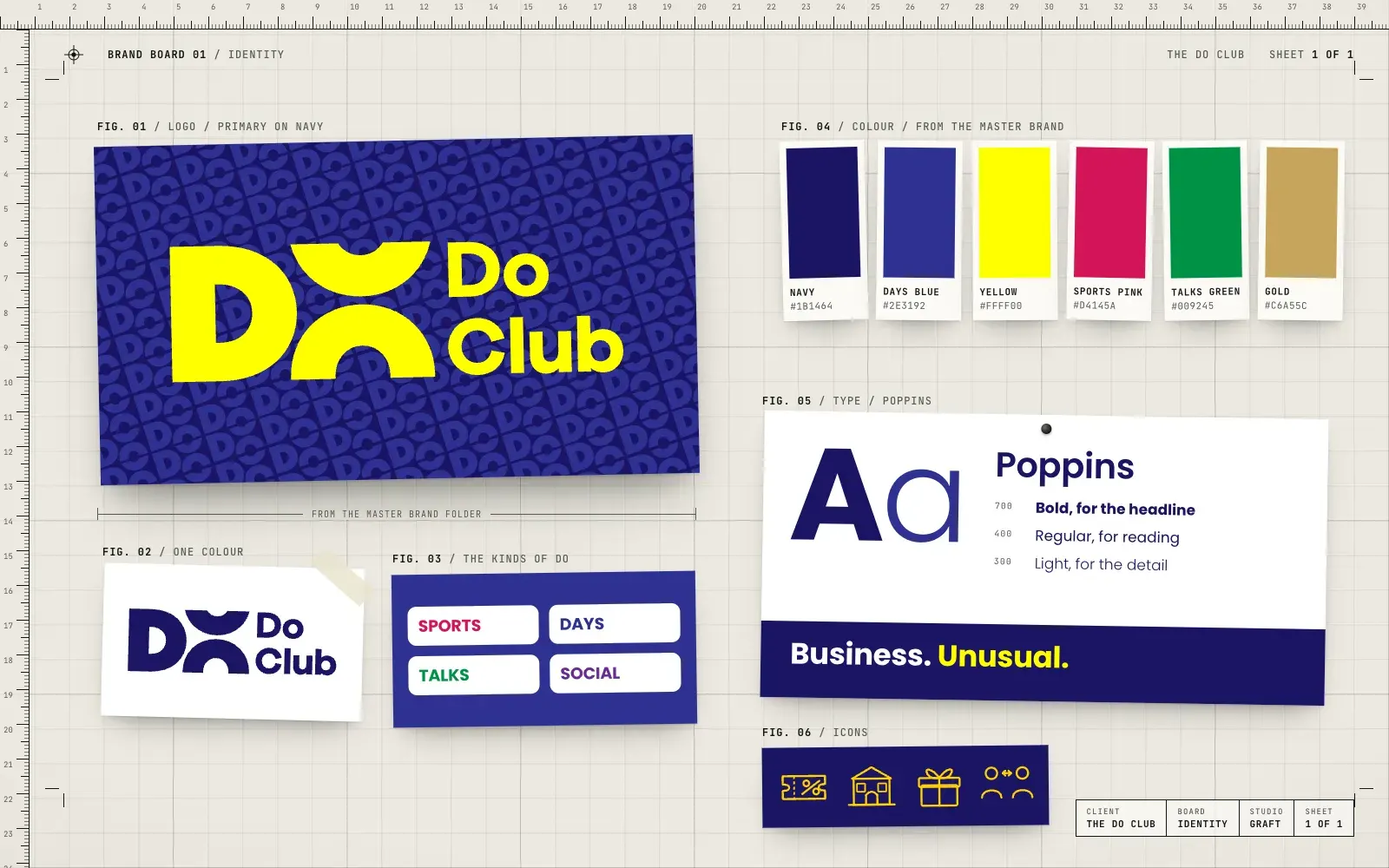
The Do Club is for "the bold ones, the builders, the ones who actually do things." So the brand had to be bold too. We built the master brand around a logo that squares up to you, a deep navy, an electric yellow and a repeating "Do" pattern, with Poppins for the type and a small set of icons for events, venues, offers and introductions.
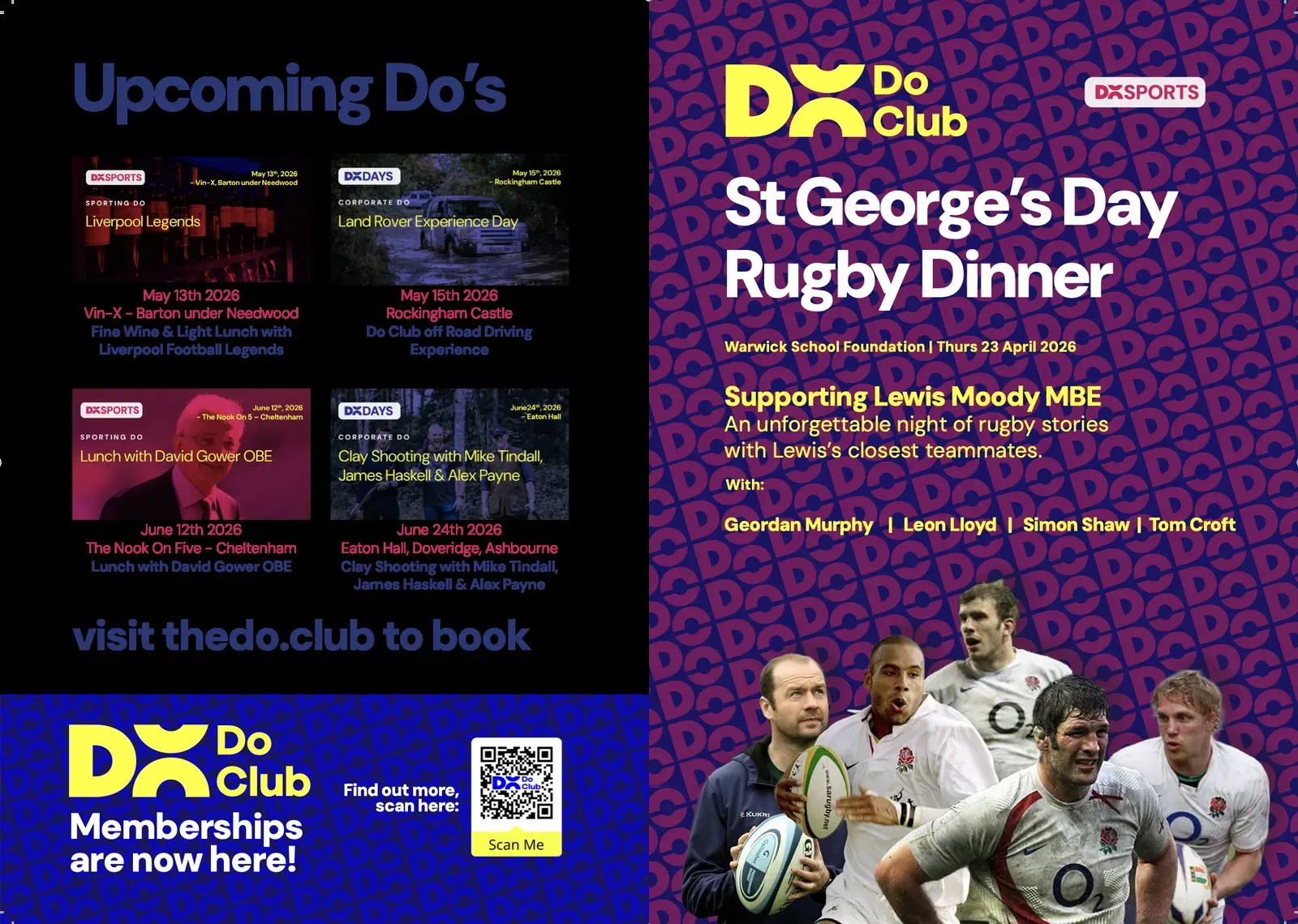
Every Do gets its own event card in the same style, and each kind of Do has its own colour: Do Sports, Do Days, Do Talks and Do Social. You can tell what sort of event it is before you have read a word.
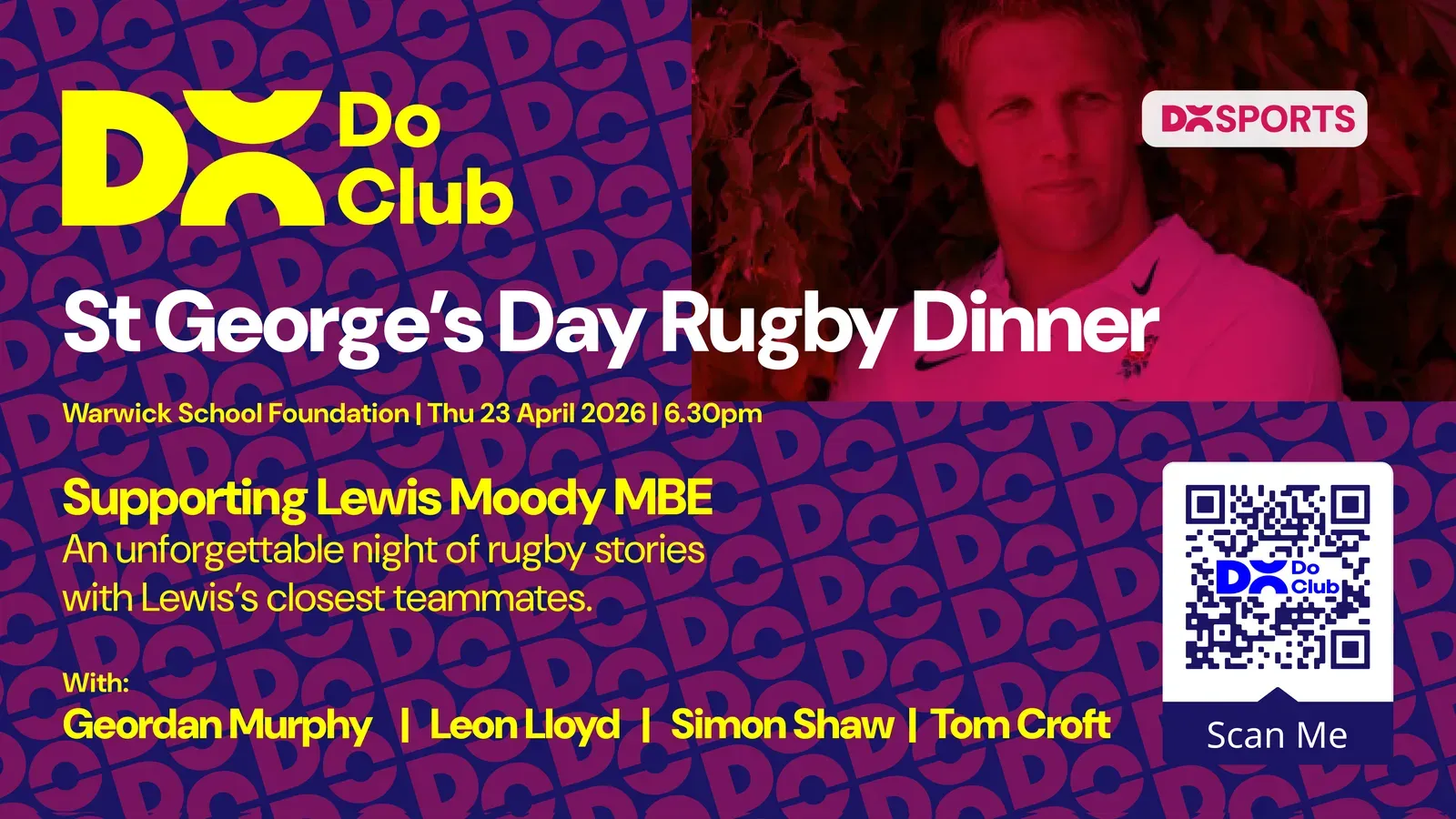
The same look carries onto everything the club puts in front of people: digital screens for the venue, brochures and sponsorship packs, printed flyers, social posts, and table cards that sell the next few Do's to the room while they eat.
A website that runs the club
The old site was on HubSpot. The new one is built in Astro and hosted on Netlify, so it's fast, cheap to run and easy to change. It's dark, gold and confident, and it's there to do three jobs well.
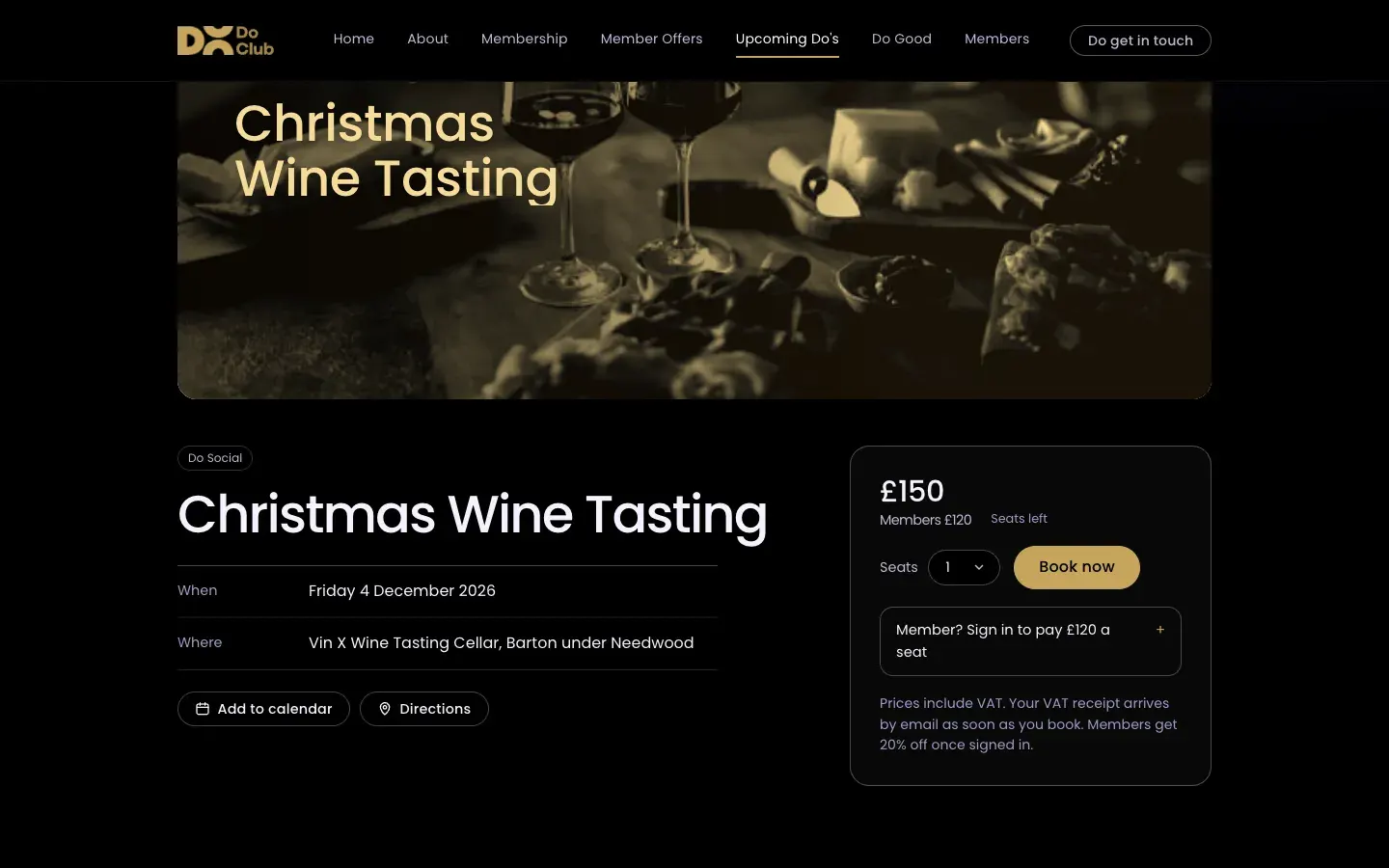
Sell the Do's. Every Do has its own page with its card at the top, the date and venue, Add to calendar and Directions buttons, and a booking box that knows how many seats are left. Members sign in and their discount comes off by itself, and card payments are built in through Stripe.
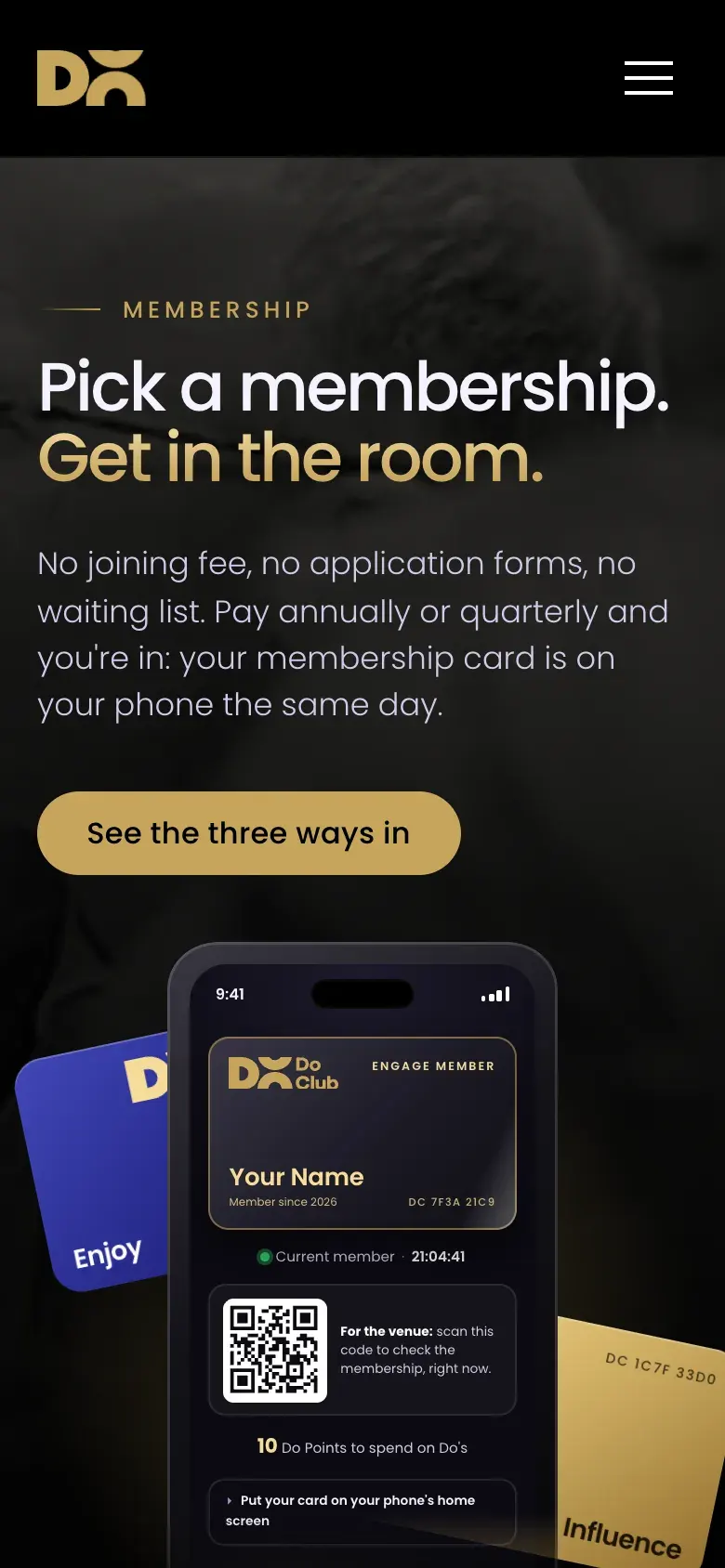
Sell the membership. Each tier has its own membership card, and team cards on the bigger tiers so a company can bring its people. The membership page shows the card on a phone, because that's where members will actually use it.
Get found. Each Do carries event schema, the club has organisation and FAQ schema, there's an llms.txt file for AI tools, share images are drawn for every page, and there are dedicated pages for business networking in the Midlands. So when someone asks Google or ChatGPT where to meet interesting business people, the club has a good chance of being the answer.
A CRM built around the club
Here's the bit most clubs never get. A general CRM would have made The Do Club fit its boxes. We did it the other way round and built the dashboard in the club's own words: Do's, guest lists, members, prospects, Do Points. It works on a laptop and installs on a phone like an app, and a "How do I...?" page walks through the everyday jobs with a button for each.
Do's and guest lists
Adding a Do is a short, step by step wizard: what and when, the card, the tickets, the write-up, then check and publish. The card is designed right there, with the photo dragged into place, and if the words won't come, "Write it for me" drafts the write-up for the club to change. Press publish and the Do is on the website with its page, card and booking box.
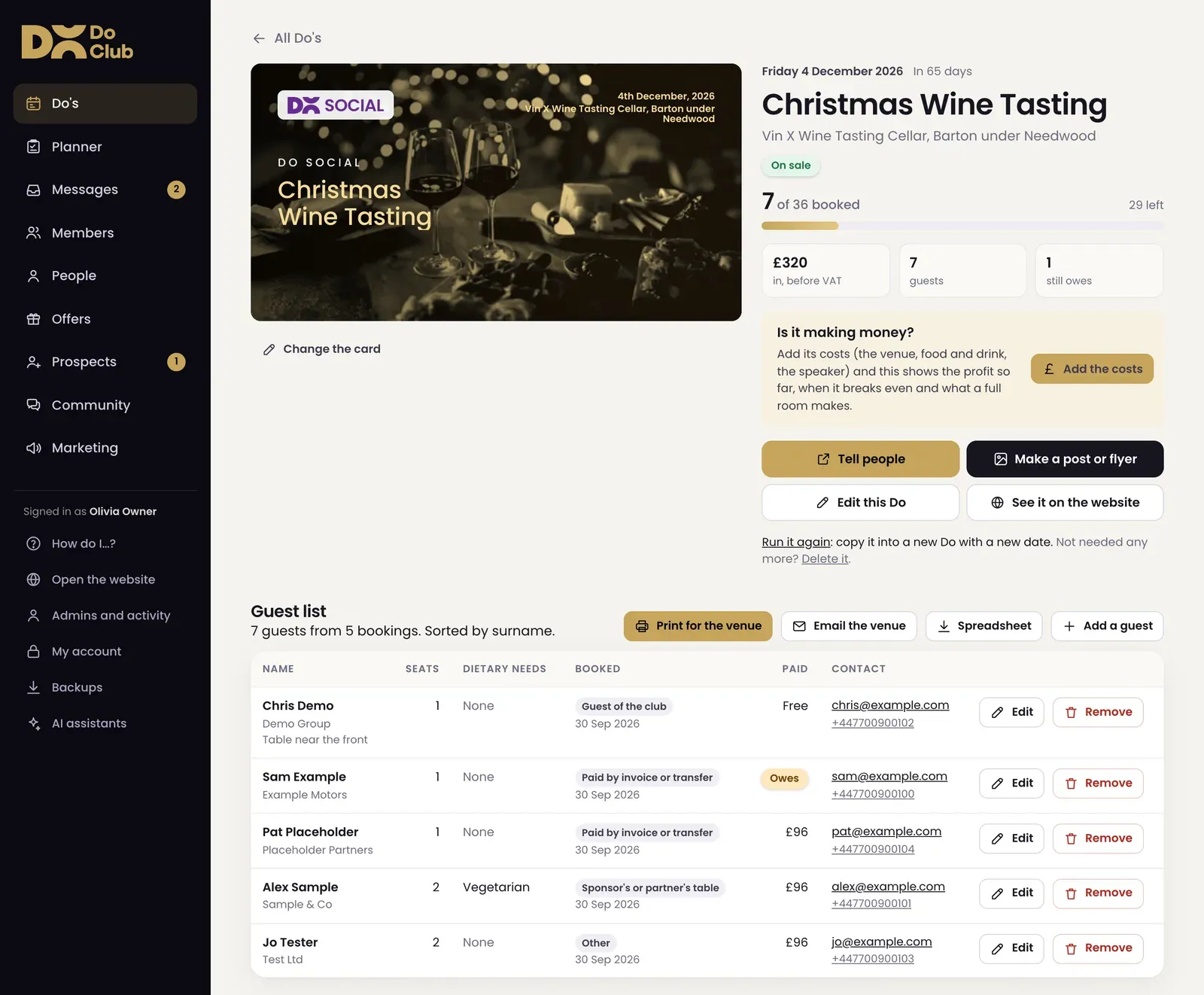
Each Do has its guest list, whether people booked online, paid by invoice, came on a sponsor's table or were guests of the club. Dietary needs go to the top of a printed list for the venue. Online bookings can be refunded from the list. And a Do that worked can be run again with a new date in a few taps.
A planner that shows when a Do makes money
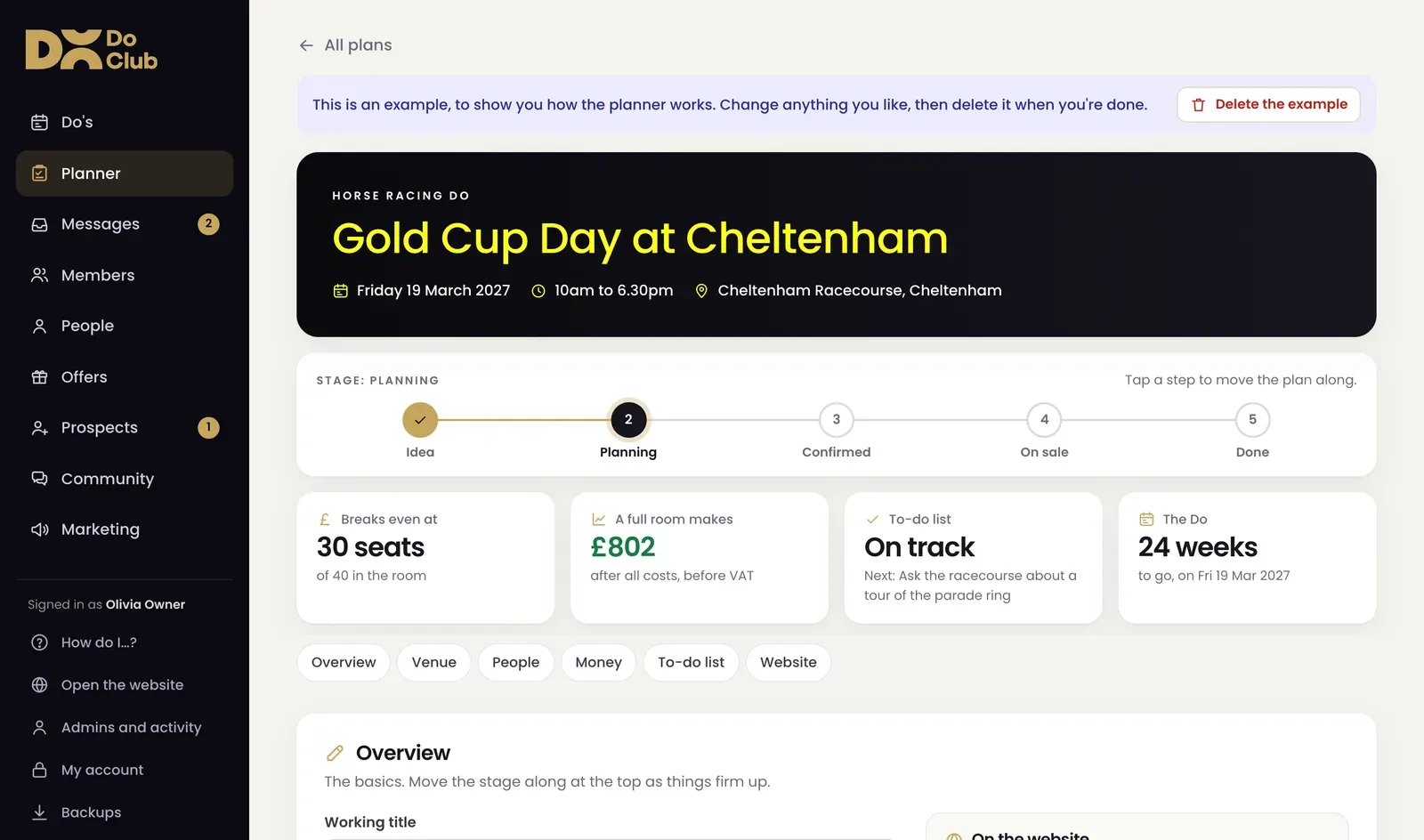
Before a Do goes on sale, it lives in the planner: the venue, the speaker, the sponsors, the costs and the to-do list, in a list or on a calendar. Put the costs in and the planner tells the club how many seats it needs to sell to break even, and what a full room makes. Once the Do is live, its page shows the same line against real bookings.
People, members and prospects
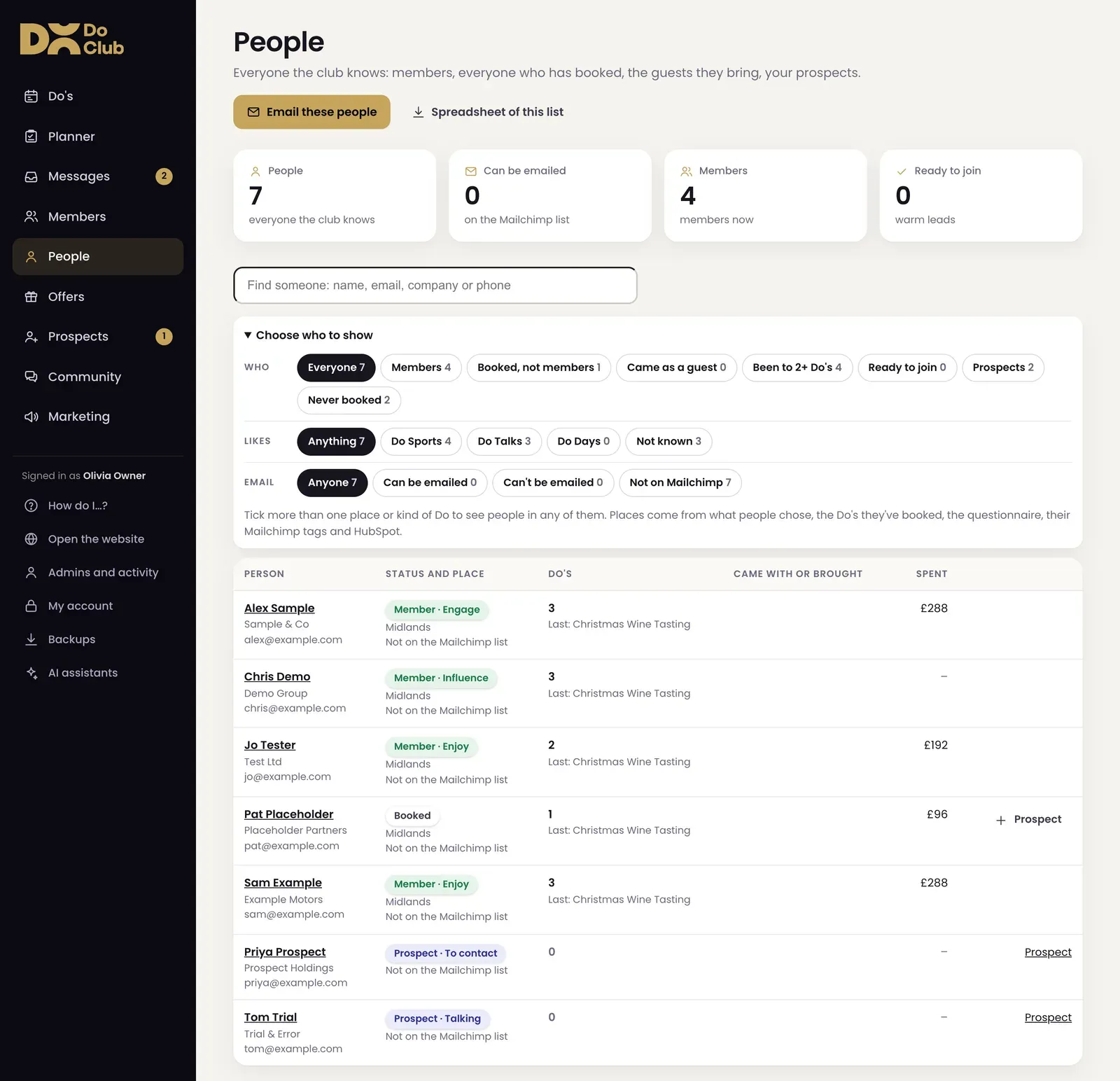
People is everyone the club knows, in one list: members, everyone who has booked, the guests they bring and the prospects. The club's Mailchimp list is connected, and its old HubSpot records were copied in, so nobody is lost in the move. You can filter by where people are, what kind of Do they like and whether they can be emailed, export a spreadsheet, or pick a group and have an email drafted to them.
Members have their own page each: tier, team cards, Do Points and who introduced whom. Prospects move through the club's own stages, from new to talking to invited to joined, with a follow-up date that pops up on the home screen. Messages from the website's contact form land in the dashboard as they arrive, and one tap turns a message into a prospect or an invitation to a Do.
A studio for posts, flyers and emails
Pick a Do and the studio fills in the rest: a square post, a LinkedIn picture, a story and a printable flyer with a QR code, all in the club's style and all from the Do's own card. Save them, download them, or post them from the same screen: it's built to post to LinkedIn, Facebook and Instagram. Nothing goes out by itself. Someone at the club presses the button.
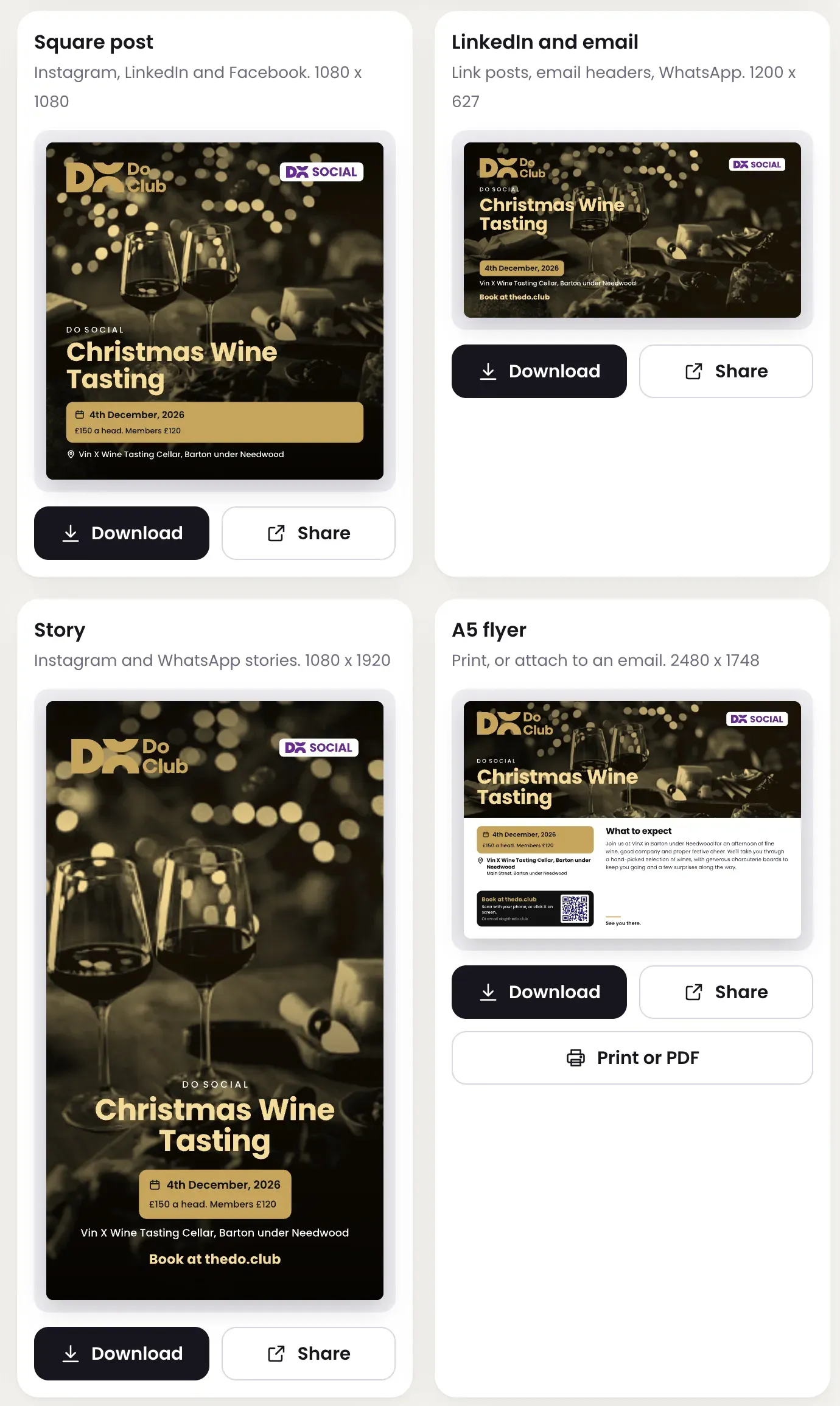
Emails work the same way. The club's welcome, booking, reminder, renewal and thank you emails are built as Mailchimp templates in the club's design, and the dashboard writes an email for a Do, checks it and puts it into Mailchimp as a draft. The club reads it and presses send.
Safe, backed up and accountable
Every admin has their own sign-in, with owners and admins. Every change is written to an activity log, so you can see who did what and when. Everything the dashboard keeps is backed up every night, encrypted, and can be put back if something goes wrong. There's also a space for website visitor numbers, ready for Google Analytics.
The members' area
Members sign in with their email and a password. Their membership card lives on their phone, with a QR code that partner venues scan to check the membership is current, and it saves to the home screen like an app. They can see their Do Points and what they have booked, book members-only Do's at the member price, see the offers from partners, introduce someone to the club and talk to other members in the members' forum.
An AI connection, with the brakes on
The club can connect its own ChatGPT or Claude to the dashboard. Ask it who's coming on Friday, which members haven't booked this season, or to draft a plan for a new Do, and it reads the club's own records to answer. It can make drafts: a new Do kept hidden, a plan, an email, a post, a prospect or a note.
What it can't do matters just as much. It can't publish, send, delete, refund or take money, and it can't change anyone's membership. Contact details stay hidden unless an owner switches them on, and everything it does goes in the activity log.
Films that launch it
For the new website we made a short motion showreel and a launch film, cut for every social shape with a shorter teaser too. They are built from the club's own logo, colours, event cards and photos, with the real website on screen: book any Do in seconds, your card on your phone, the member benefits and the membership tiers.
What it adds up to
A brand people recognise across a room. A website that sells the Do's and the membership. And behind it a CRM that fits the club like a glove: events, guest lists, money, people, members, prospects, posts and emails in one place, run by the club itself, with AI help that can draft but never act on its own.
Brand first, then build, then keep going.